The State Government writes laws that affect the daily lives of all Washingtonians. Yet, most people do not understand how the laws are made, what goes into the legislation, or how that legislation is enacted. In this lesson, students will discover what the state legislature is doing in regards to issues they care about.
Overview
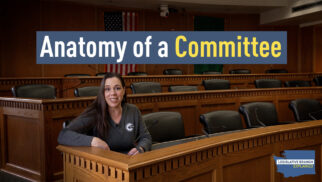
Students in this lesson will choose one bill to follow as it makes its way through the 2025 Legislative Session. While doing this, they will learn how a bill becomes a law, from the birth of an idea to the signing of the bill by the governor. By using short videos, replete with interviews with elected officials, to explain the process, students will identify places to get involved in the legislative process. They will analyze public testimonies, both for style and content. Students will watch speeches given by legislators on the floor of the House and Senate, examining amendments offered by both Democrats and Republicans. Finally, they will watch the governor sign the legislation into law, and identify further ways to stay engaged in the future.
Essential Questions:
- What are the steps of the legislative process?
- How do the House and Senate provide a check to one another’s power?
- To what extent is the Executive Branch involved in the legislative process?
- How can one get involved in the legislative process?
Objectives:
Lesson Plan for Civics and Government: Middle and High School – 9 to 10 class periods
- Understand the legislative process in Washington State
- Identify places to engage with the lawmaking process
- Learn how to contact elected officials
Education Standards
- Middle School
- C2.6-8. 4 Use knowledge of the function of government to analyze and address a political issue.
- C4.6-8.3 Employ strategies for civic involvement that address a state or local issue.
- High School
- C2.11-12.1 Analyze citizens’ and institutions’ effectiveness in addressing social and political problems at the local, state, tribal, national and/or international level.
- C4.11-12.2 Analyze and evaluate ways of influencing local, state, and national governments and international organizations to establish or preserve individual rights and/or promote the common good.
Curriculum Notes:
This curriculum unit comes with a customizable GoogleSlide Deck with videos and discussion questions. Student notebooks are also available, with links to public testimonies, floor debates, and bill signings for each bill.
*Note: to edit Google Docs or Google Slide Deck, make a copy, rename, and edit from there.
*Note: HB 1644 is a complex bill that is more appropriate for high school students.


 Teacher Guide
  Google Slide Deck