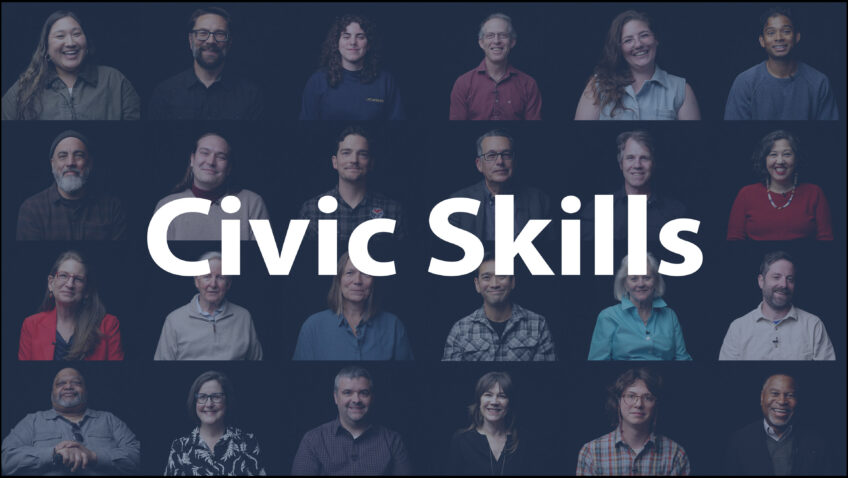
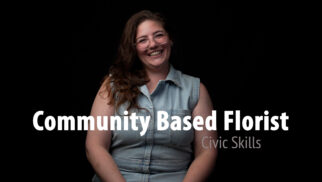
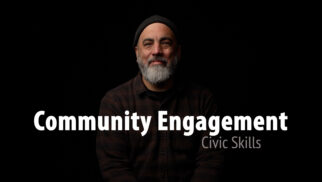
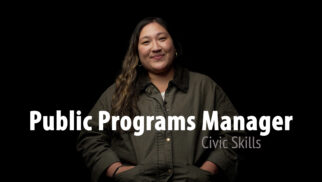
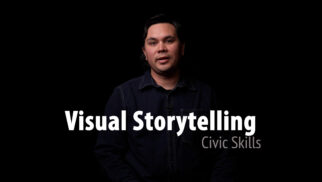
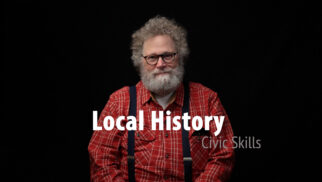
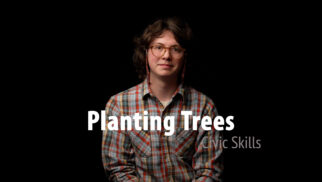
Hear directly from people engaged in the work of building community and developing a Puget Sound region that serves the needs of its people in a variety of ways. This Civic Skills video series showcases how people engage in the life of their cities, towns, and neighborhoods. Learn from public officials, business owners, community and labor organizers, health care workers, environmental scientists, leaders within a variety of nonprofits, backyard gardeners, poets, artists, and athletes. Explore what fellow Washingtonians have to say and be inspired by what one person can do for their community!
Central Questions:
- What roles of leadership do students occupy in your school community?
- How can civic skills inform and improve the benefit that student leadership provides to the school community?
- How can you communicate the above to those who might put the ideas into practice?
Objectives:
- Identify specific civic skills, define them, and explain how they can be developed
- Apply civic skills to their own context within the school, connecting them to student leadership roles
- Cocreate an articulation of how civic skills can be used to benefit the school community
- Effectively communicate their vision of how civic skills might shape school life
Education Standards
C1.11-12.3 Apply civic virtues and democratic principles when working with others.
C2.11-12.1 Analyze citizens’ and institutions’ effectiveness in addressing social and political problems at the local, state, tribal, national and/or international level.
C4.9-10.3 Describe the impact and the appropriate roles of personal interests and perspectives on the application of civic virtues, democratic principles, constitutional rights, and human rights
C4.11-12.3 Evaluate the impact and the appropriate roles of personal interests and perspectives on the application of civic virtues, democratic principles, constitutional rights, and human rights.
Acknowledgements:
What a joy to collaborate with Corey Paulson and Brett Hansen on this project! The enthusiasm and expertise of the TVW staff brought this teaching material to life.
We are inspired by the perspective and insights shared by our amazing civic leaders.
We are thankful to the Washington State History Museum, HistoryLink, and Lakeside School for hosting us for our filming.
Since we began our effort (The Puget Sound Civics Co-op) to create place-based learning in the fall of 2023, we have found overwhelming support in the community. We are grateful for the direction provided by John Findlay, Steve Boyd, Margit McGuire, Jerry Price, and Michael King. We are thankful to Leonard Garfield for hosting civics workshops at MOHAI in March of 2024 and 2025. We are thankful to Jennifer Ott for hosting the HistoryLink Book Club.
And of course, James and Marshall are grateful for all we have learned from our students over the last couple decades. We are excited to put this teaching material to use in our classrooms, and we hope it sparks meaningful civic engagement across the state!
Marshall Davidson and James Nau

 45min - Civic Skills: Building a Local Community